MVR MAGAZINE · Environment
Mangroves are making a comeback—but a global gain is not a local all-clear
MVR Magazine · Published 16 Nov 2026 · Research in context
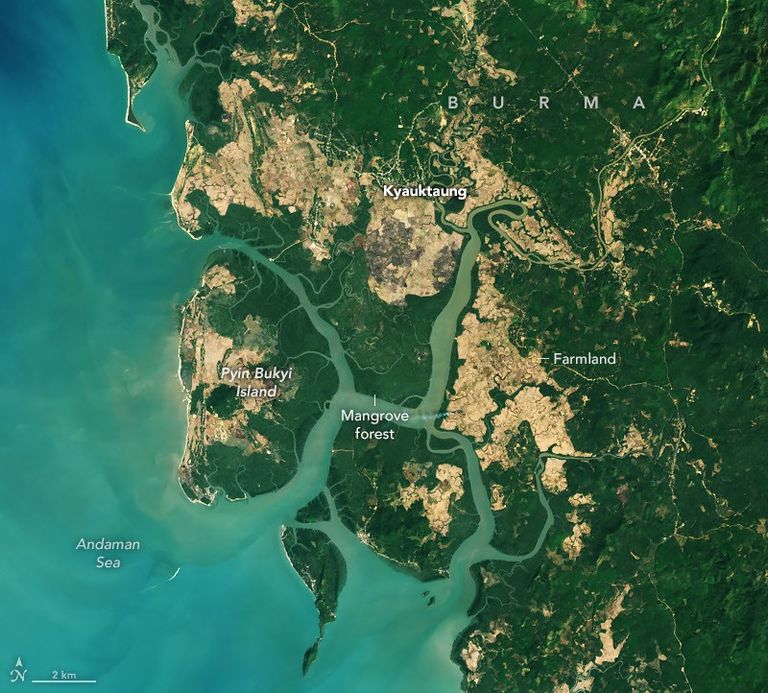
NASA’s 13 November Earth Observatory feature highlights research showing a reversal in the long decline of mangrove forests. The underlying study, announced by Tulane University in June, used decades of satellite observations to identify expansion and regrowth across the world.
Two dates, two different things
The new NASA feature brings attention to earlier research; it is not a claim that the entire recovery happened this week. Its comparison from Myanmar shows how satellite images can reveal changing coastal vegetation over many years.
Why the distinction matters
Mangroves support coastlines, fisheries and carbon storage, but a global recovery does not establish the condition of every forest. Local damage and continuing pressures still need attention. Long-term vegetation research is also separate from today’s storm forecast: these findings should never be read as a cyclone warning, a prediction of protection for a particular village or an assurance that a coast is safe.