MVR ORIGINAL · A PRACTICAL READING GUIDE
A flood map, a prize announcement and a trade meeting can all become a headline. Understanding them starts with asking what the headline leaves out.
A headline is an invitation to read, not a complete account. In a group chat, it may arrive without the article, the publication date or the words that explain uncertainty. Taking a short pause before sharing can give those missing details a chance to catch up.
This is MVR’s reading routine: five questions to turn a striking headline into a more useful understanding. The routine is our editorial synthesis, illustrated with linked sources; it is not field reporting or an interview.
1. Who is making the claim?
Open the original link. Is the statement an award announcement, a government release, a research finding or a journalist’s account? Each answers a different question. An award body can confirm its chosen winner; a ministry can explain its own announcement. Neither automatically establishes every wider interpretation attached to it.
UNESCO’s discussion of journalism emphasizes verification and context, and the distinction between facts and opinions. Treat the source’s identity as the beginning of your assessment, rather than a shortcut around it.
2. Which date am I looking at?
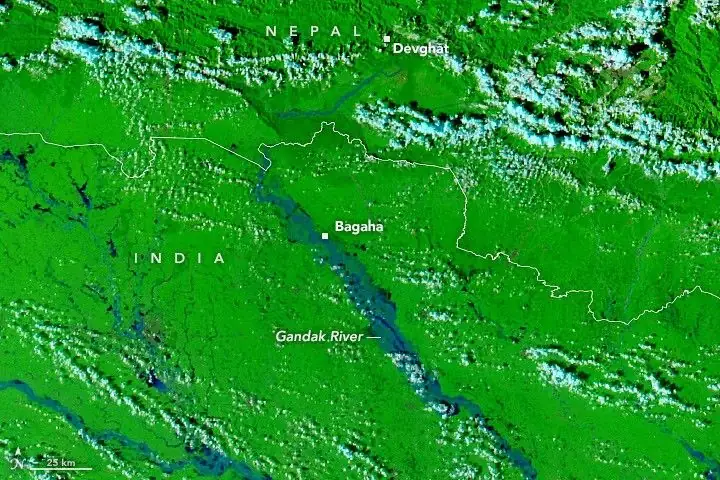
The event date, the article date and the image date can be different. In NASA’s Gandak River report, the article is dated 2 October 2026, while the comparison images were captured on 20 and 29 September. A later share does not make either image a picture of conditions today.
Before forwarding an emergency story, look for current local guidance. A useful historical explanation and an immediate safety instruction serve different purposes.
3. What happened—and what is only planned?
A scheduled meeting is not a completed agreement. A nominee is not an award winner. A proposal is not an implemented rule. Notice the verbs: announced, proposed, approved, launched and completed describe different stages. Keep that distinction when you summarize the story for someone else.
4. Does the picture belong to this story?
Read the caption and credit. Satellite images may use false colour to make features easier to distinguish; stock photographs may illustrate a topic rather than show the reported event. If the caption is missing, avoid treating the image as proof of when or where something happened.
A small screen can hide those details. Open the source page before deciding what the picture establishes.
5. What remains unknown?
Ask which figures are provisional, whose perspective is missing and whether the source has issued a later update. If a claim matters to a real decision, compare relevant independent reporting and the underlying documents. Say what you can establish and leave uncertainty visible.
Try it with one headline
Write three short lines: what the source says, when it happened, and what I still need to check. If you cannot fill them in, share the source as a question rather than passing the headline on as a settled fact.
Read today’s World & Headlines and practise with one item. The goal is not to become cynical about every story. It is to give good information a clearer path through your day.